


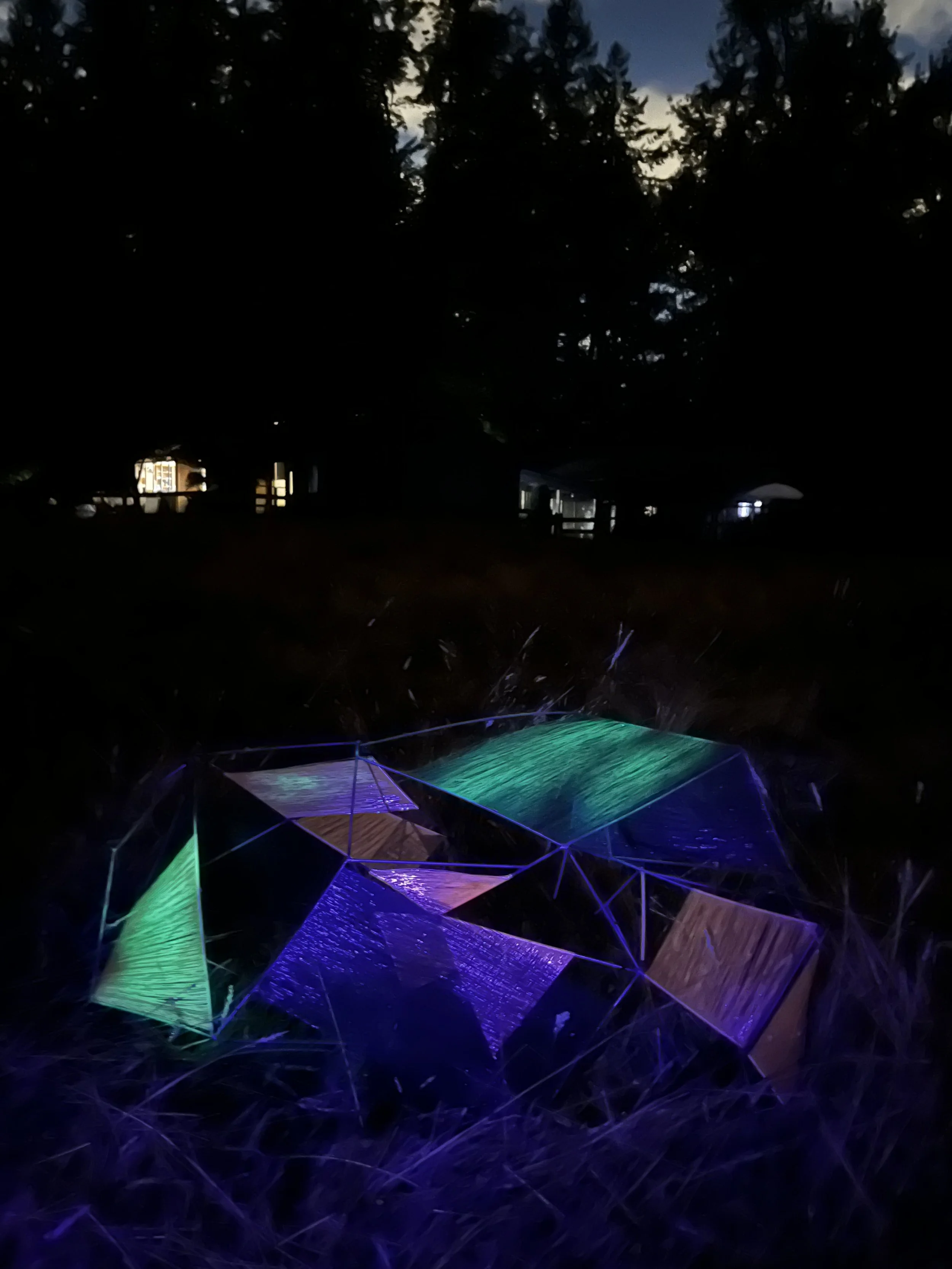

Edge of a Glacier, 2026
76 × 50 × 40 cm
Copper wire, iron, phosphorescent paint
Constructed using rope-weaving techniques, the sculpture Edge of a Glacier reflects artist Sarah Steeves’ ongoing fascination with textiles and geology. Since 2024, Steeves’ practice has centred on handweaving copper wire on the loom to create small geologically inspired forms, translating textile techniques into sculptural metal works. This year, that inquiry has moved off the loom and outdoors, expanding into large-scale forms made to live in the landscape.
Created specifically for the landscape at Coffin Farm, Edge of a Glacier takes inspiration from glacial erratics, masses of rock that were picked up by glaciers during the last Ice Age, then dropped somewhere far from their home, as if the glaciers had grown weary of their extra load. On their very slow move, these rocks crossed landscapes now divided by borders, and Edge of a Glacier considers the underlying continuity of this land, reflecting critically on the symbolism of the national border in our current political moment.
Steeves was inspired by the words of scholar and poet Gloria Anzaldúa, who wrote extensively about the instability of the borders we live by: “But the skin of the earth is seamless. The sea cannot be fenced; El mar does not stop at borders.” When the ice sheet that covered the artist’s home in British Columbia, Canada (some 20,000 years ago) finally reached Washington State, it began to melt, letting go of the last of its glacial erratics. These geologic entities crossed a political border that did not yet exist, evidence of a landscape that was once continuous.
Edge of a Glacier after dark.
By day, the work is inspired by glacial erratics, specifically ones that were transported by glaciers from British Columbia to Washington State.
By night, their inner lives of minerals come to life, releasing their phosphorescence and glowing hues of greens, violets and pinks after dark.